Vaping and Mental Health in Young People
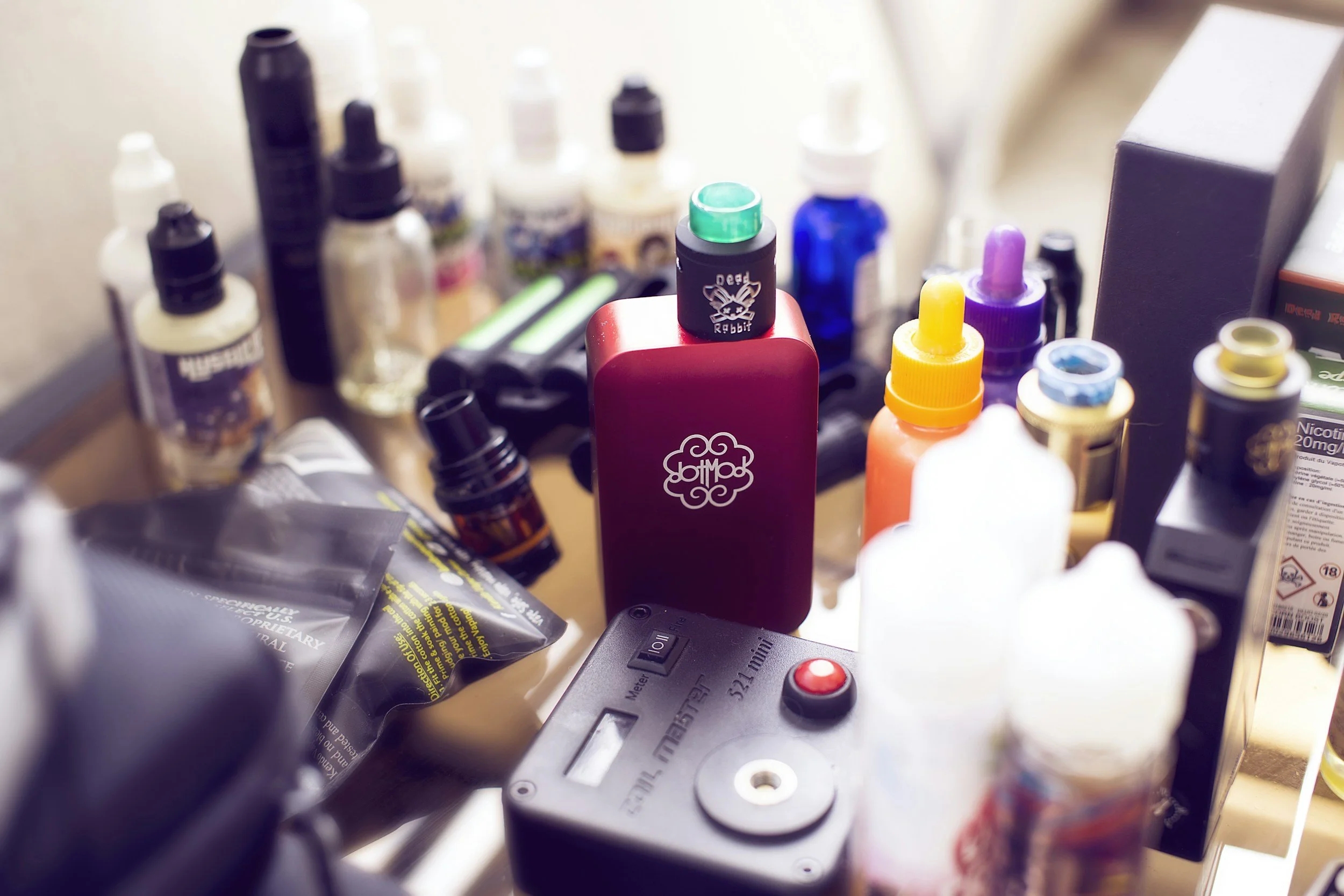
Vapes come in different shapes, sizes and flavours
Vaping has become one of the most urgent youth health concerns in Australia. While national reforms are starting to reduce usage, many young people, especially in rural and remote communities, still face daily exposure to e-cigarettes (vapes), often without understanding the risks.
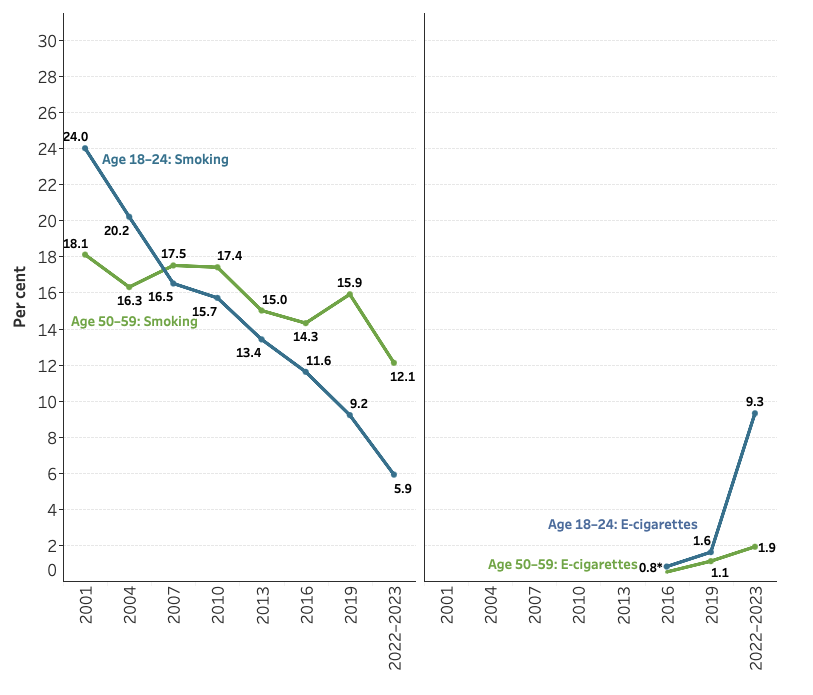
Tobacco smoking versus e-cigarette use among people aged 18-24 and 50-59.
Source: NDSHS 2022 - 2023, AIHW, https://viz.aihw.gov.au/t/Public/views/FigureV_1_DI_AH24_updated/Dashboard1
What the data shows
While initial trends (see above) show high take up, recent data from the Generation Vape study shows that 15% of Australian teens aged 14–17 vape, down from 18% in 2023, while 85% have never vaped, up from 82% (Cancer Council NSW, 2025). This decline was prior to Australia’s July 2024 vaping reforms, which restricted all vape sales to pharmacies, banned advertising and social media promotion, and increased penalties for illegal sales (ABC News, 2024). Yet, young people are still accessing e-cigarettes through friends, social media and illegal sellers.
While the trend is moving in a positive direction, research also shows that young people with friends who vape are 15 times more likely to vape themselves. Many young people don’t know what they’re inhaling, with some unknowingly using illicit cannabis compounds (Queensland Government, 2025).
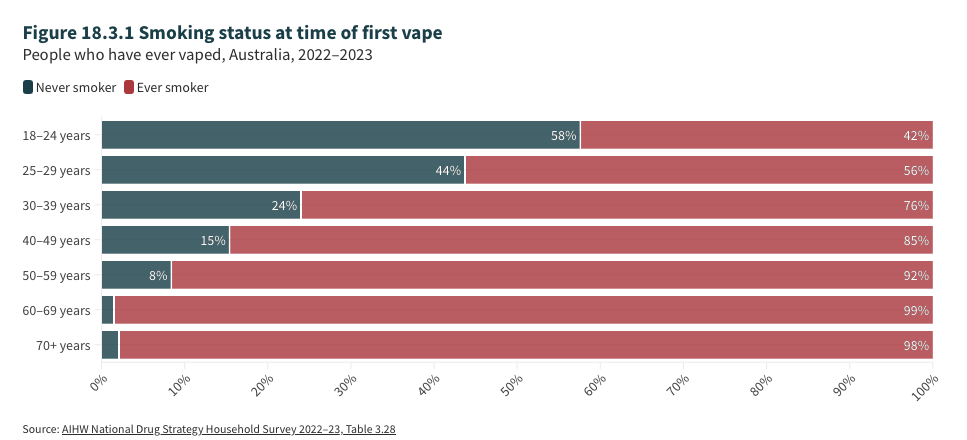
Use among young people is high, and they are not using it to quit smoking.
Source: AIHW, National Drug Strategy Household Survey 2022 - 2023, https://www.aihw.gov.au/reports/illicit-use-of-drugs/national-drug-strategy-household-survey/data
The Link Between Vaping and Mental Health
Multiple studies confirm a strong connection between vaping and poor mental health:
Adolescents with severe depressive symptoms are twice as likely to vape (University of Sydney, 2024).
Vaping is significantly associated with psychotic experiences (Hans Oh et al., 2021)
Teens who vape report higher levels of anxiety, stress, and sleep disruption (ABC News, 2024).
This relationship is bidirectional: young people may vape to cope with stress or trauma, but nicotine and other chemicals can worsen mental health over time.
Tasmanian Context
In Tasmania and other rural areas, vaping risks are amplified by:
Limited access to health education and enforcement.
Stigma and privacy concerns, which prevent help-seeking.
Peer sharing and social media glamorisation, especially where adult supervision is low.
Fewer outreach programs, meaning schools and families may lack support.
Blurred Minds and Emerging Minds note that rural youth often face additional barriers to mental health literacy and substance use prevention, making early intervention critical.

Connect with people who can help
What can we do to help?
Parens and carers:
Start open conversations early using tools like Blurred Minds.
Model healthy behaviour and avoid vaping around children.
Watch for signs like secrecy, mood changes, or unfamiliar devices.
Use Emerging Minds guides to discuss substance use and mental health (see resources).
Young people:
Know the risks: Vaping can harm brain development, mood, and concentration.
Support your peers: Talk to a trusted adult or use anonymous help lines.
Build refusal skills: Role-play scenarios with teachers or youth workers.
Access youth-friendly support via Orygen and Headspace.
Resources
Blurred Minds: Interactive lessons and games for schools and families.
Orygen: Youth mental health research and peer-led programs.
Emerging Minds: Mental health resources for parents and educators.
Early Childhood Foundation: Prevention-focused education for younger children.
Vaping isn’t just a trend - it’s a health risk with deep ties to youth wellbeing.
References
ABC News. (2024). Teens who vape more likely to have poor mental health. Retrieved from abc.net.au
Cancer Council NSW. (2025). Generation Vape Study. Retrieved from generationvape.org
Oh H, Banawa R, Lee JO, Zhou S, Huh J. (2021). Vaping and psychotic experiences among college students in the United States. Drug Alcohol Depend. doi: 10.1016/j.drugalcdep.2021.108987.
Mindgardens Neuroscience Network. (2025). y-Quit Vaping Study. Retrieved from mindgardens.org.au
Queensland Government. (2025). What’s really in a vape?, Retireived from https://www.health.qld.gov.au/newsroom
University of Sydney. (2024). Depressed adolescents twice as likely to vape. Retrieved from sydney.edu.au
Blurred Minds. (2025). Youth Vaping Education Resources. Retrieved from blurredminds.com.au
Emerging Minds. (2025). Parenting and Substance Use Resources. Retrieved from emergingminds.com.au
Orygen. (2025). Youth Mental Health Programs. Retrieved from orygen.org.au
Early Childhood Foundation. (2025). Prevention Education. Retrieved from earlychildhoodfoundation.org.au